Chest Workout at Home Without Equipment: The Practical Approach
By:Author:Nordletics Editorial
Updated on:October 28, 2026
- The Overnight Chest Growth Myth, Answered Honestly
- How a No-Equipment Chest Workout Actually Builds Strength
- What Actually Changes Your Chest Workout Results
- A Sample Chest Routine You Can Repeat Weekly
- Fitting Chest Training Into a Crowded Week
- Where Chest Training Progress Usually Slows Down
- Mistakes That Quietly Undo a Home Chest Routine
- Making a Nordletics Chest Workout Part of Your Routine
- Keeping Your Chest Routine Going Past Week One
Yes, you can build real chest strength at home with no equipment - push ups and their variations load the chest enough to make it stronger over time.
The chest muscles respond to resistance, and your own bodyweight is resistance. Angle, tempo and hand position change how hard the muscle has to work, which is how you keep progressing without a single dumbbell.
This guide covers what actually trains the chest without gear, how to structure a week, what a solid routine looks like, where people usually stall, and how to keep showing up.
The Overnight Chest Growth Myth, Answered Honestly
Nobody builds a noticeably bigger or firmer chest in a few sessions, no matter how good the workout is.
Muscle adapts gradually. The tissue needs repeated bouts of work, recovery between those bouts, and that pattern repeated across weeks before the shape of the muscle starts to shift.
There's also no such thing as spot reducing chest fat with push ups - the body decides where it loses fat from, and no exercise can target that choice.
The honest version is slower but it works: consistent pressing movements, done often enough, build real strength and shape over time.
How a No-Equipment Chest Workout Actually Builds Strength
Two things drive the result: how much tension the chest feels in each rep, and how consistently you repeat that stimulus week after week.
Tension From Angle and Hand Position
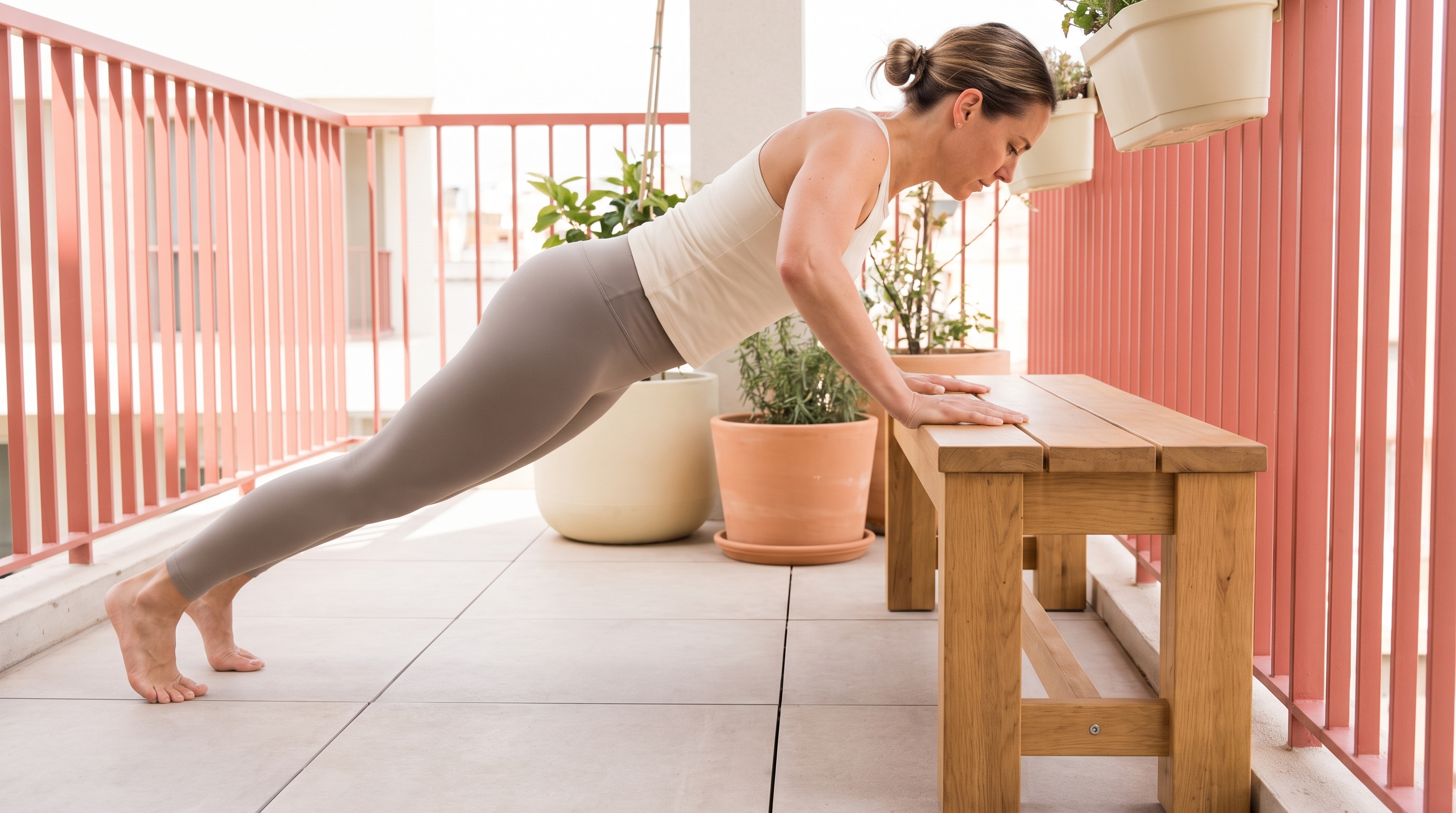
Pushing your body at different angles - flat, incline against a chair, decline with feet raised - changes which part of the chest takes the most load. Moving your hands wider or narrower shifts the tension too, so the same push up can feel easier or harder depending on setup alone.
Tension From Tempo and Range
Slowing the lowering phase of a push up keeps the chest under load for longer, which asks more of the muscle without adding any weight. Going through the full range, chest close to the floor and arms fully extending at the top, matters more than rushing out extra reps.
What Actually Changes Your Chest Workout Results
Three factors matter more than anything else when you're training chest at home with no gear.
The Levers That Matter
- Consistency over weeks - a push up session done three times a week for two months beats one hard session followed by a long gap.
- Progressive difficulty - moving from standard push ups to decline push ups or slower tempos keeps the chest challenged once the easier version stops feeling hard.
- Full range of motion - a half push up trains less tissue than a full one, so depth matters more than speed.
A Sample Chest Routine You Can Repeat Weekly
Here's a simple structure to copy, built around three sessions a week with rest days between.
A Repeatable Weekly Layout
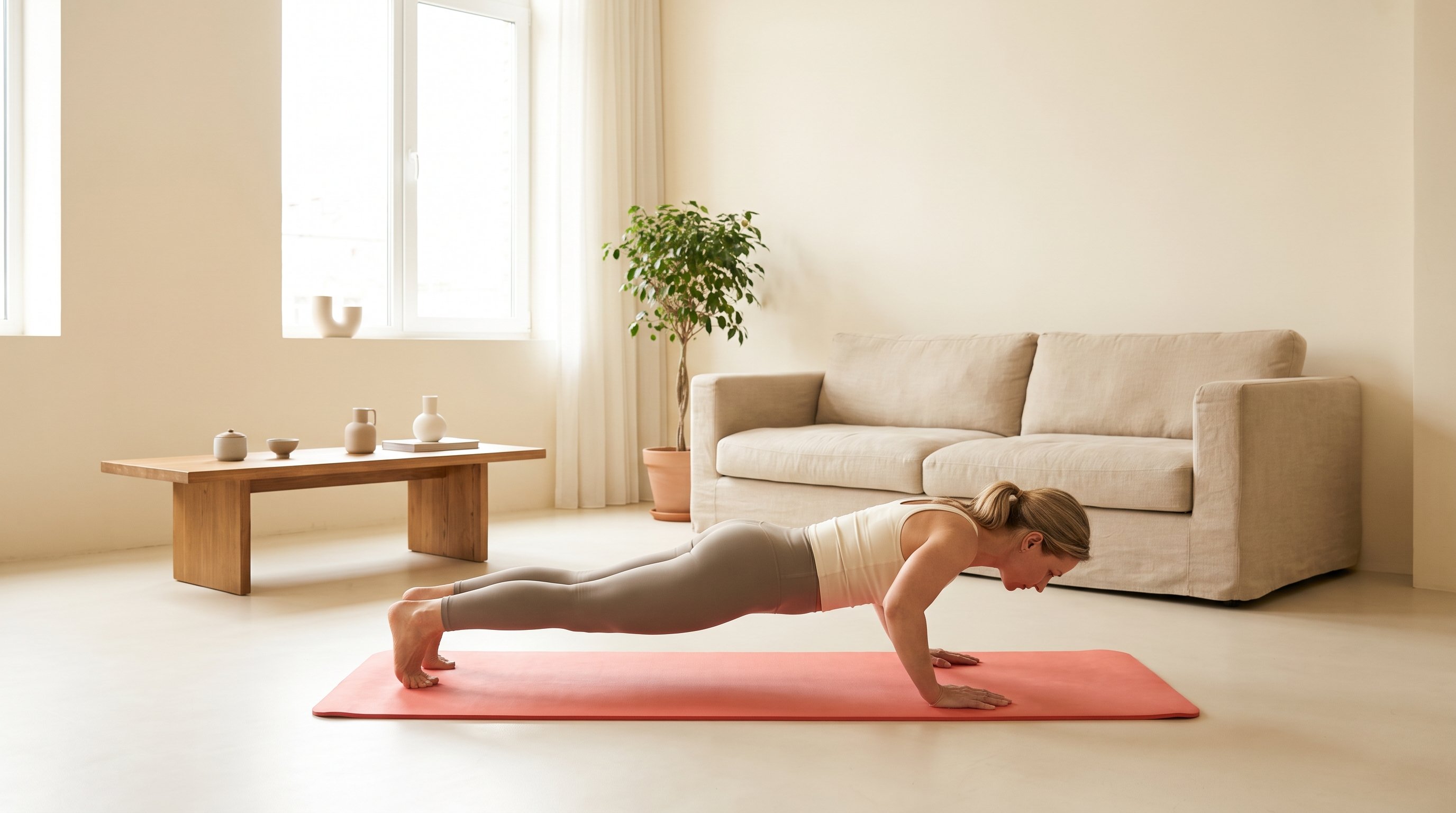
- Monday - standard push ups, wide-hand push ups, and a slow-tempo set with a 3-second lower.
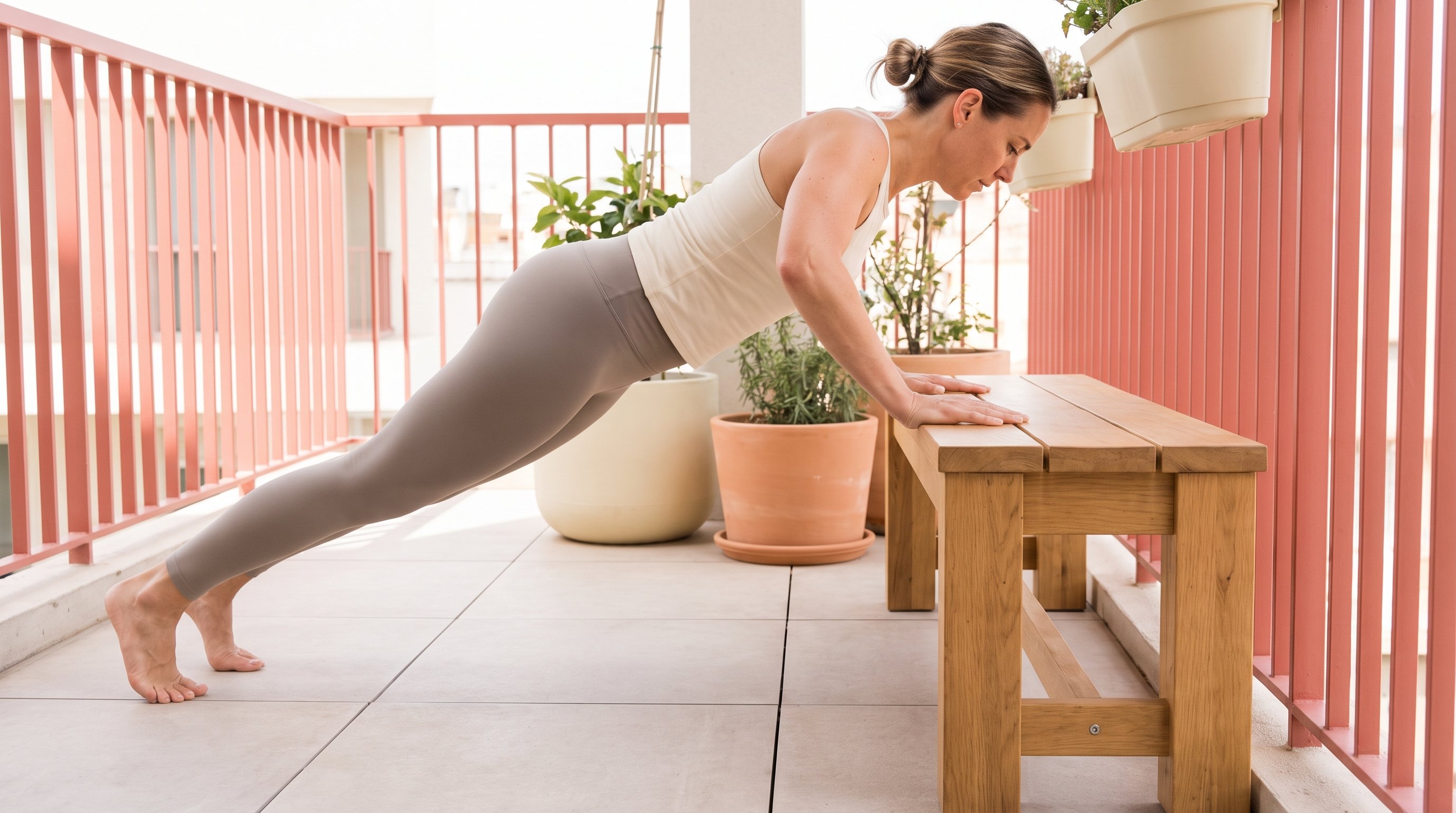
- Wednesday - incline push ups against a sofa or step, plus narrow-hand push ups for the inner chest.
- Friday - decline push ups with feet raised on a chair, finishing with a set of standard push ups to failure.
Fitting Chest Training Into a Crowded Week
A chest session without equipment doesn't need a gym bag, a commute or a changing room - it needs about ten to fifteen minutes and a patch of floor.
That makes it one of the easiest habits to attach to something you already do, like right after you make coffee or before you shower in the evening.
Nordletics builds this kind of session into a wider home workout plan, so chest days sit alongside the rest of your training instead of becoming one more thing to plan from scratch.
Where Chest Training Progress Usually Slows Down
Early sessions often feel like fast progress because the body is adapting to a brand-new stimulus.
After that initial stretch, gains level off and the same push up variation stops feeling harder, which is usually the point people quit instead of the point they adjust the routine.
The fix isn't more reps - it's a harder variation or slower tempo, introduced once the current one feels manageable rather than on a fixed date.
Mistakes That Quietly Undo a Home Chest Routine
Cutting the Range Short
Stopping a few inches above the floor trains less of the muscle than going all the way down. Lower until your chest is close to the ground, every rep.
Letting the Hips Sag
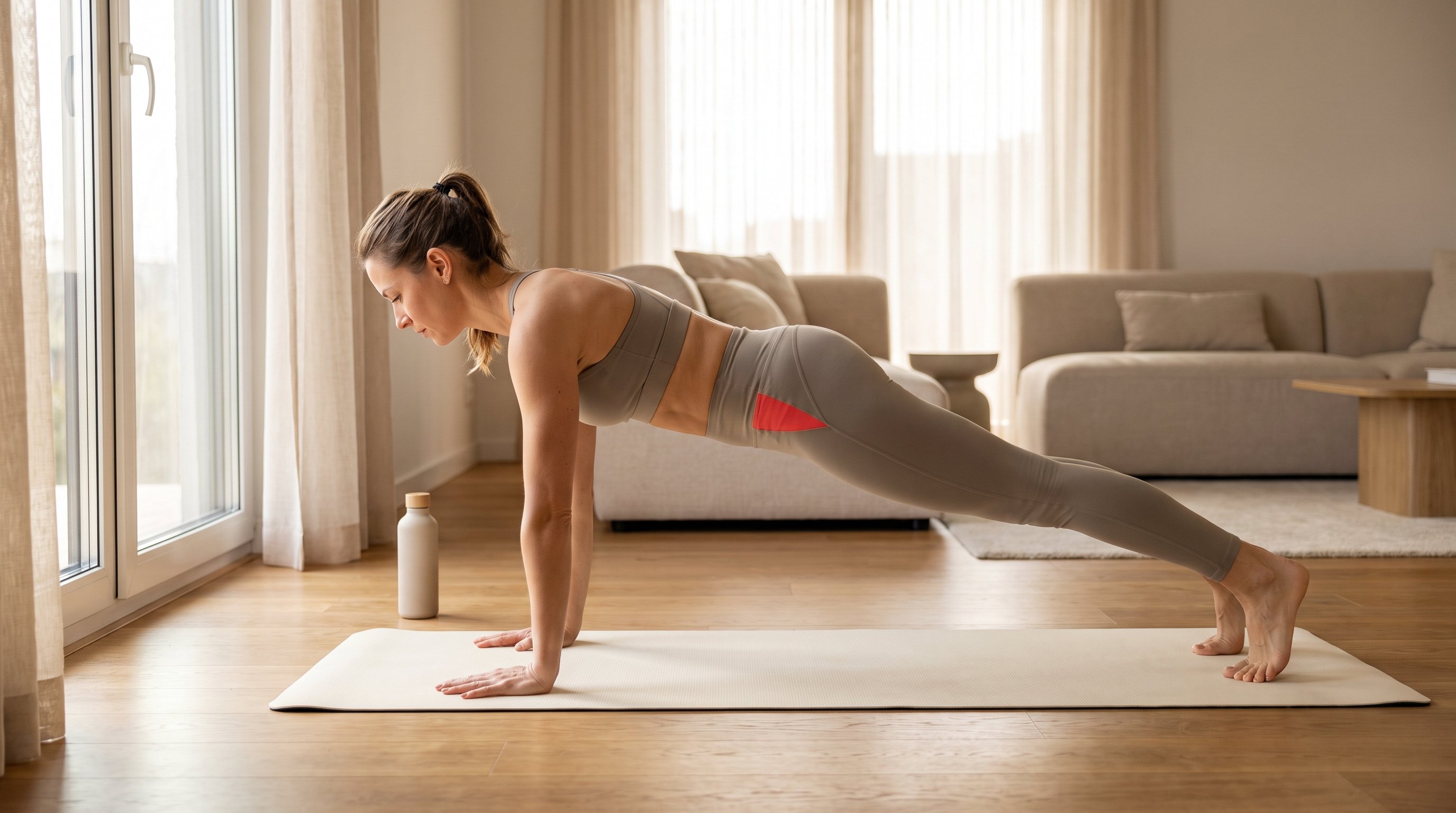
A dropped midsection turns a chest exercise into a lower-back strain. Keep the body in a straight line from shoulders to ankles throughout.
Never Changing the Angle
Doing the same flat push up for months stops asking anything new of the chest. Rotate in incline, decline or hand-width changes every few weeks.
Skipping Rest Days
Training the same pressing muscles daily doesn't speed up results, it just adds fatigue. Two to three sessions a week with rest between is enough.
Chasing Rep Count Over Control
Twenty sloppy push ups do less than ten controlled ones. Slow down before adding volume.
Making a Nordletics Chest Workout Part of Your Routine
A chest routine only pays off if it's still happening a month from now, not just on a motivated Monday.
Nordletics lays out home workout plans with chest-focused sessions built in, so you're following a structure instead of guessing which push up variation comes next.
Progress tracking keeps a record of what you've done, which makes it easier to see the pattern of consistency rather than judging everything by how one session felt.
Get Your Workout Plan
Train Smarter Today
Keeping Your Chest Routine Going Past Week One
Pick three days this week, put push ups on the calendar at a fixed time, and do the first session today rather than waiting for a better moment.
Nordletics can take the planning off your plate so the only decision left each day is whether you showed up, and that's the one that actually moves the needle.
FAQ
Push ups and their variations can build real chest strength and some shape over time, especially once you progress to harder angles. How visible that change is also depends on overall body fat, which exercise alone doesn't fully control.
Bodyweight pressing can create plenty of tension for the chest, particularly for anyone starting out or returning after a break. Once standard push ups feel easy, you keep progressing through angle and tempo changes rather than needing external weight.
Drop to an incline push up against a step or sofa, which reduces the load while keeping the same movement pattern. As that gets easier, move closer to the floor until a standard push up feels manageable.
Nordletics builds chest-focused sessions into a broader home workout plan, so you're not left to figure out progression on your own. It also keeps the rest of training - legs, core, back - in the same place so the week stays balanced.
Share this post