Back Workout at Home Without Equipment: How to Fit It Into Your Week
By:Author:Nordletics Editorial
Updated on:October 28, 2026

- The Myth That You Need a Pull-Up Bar to Start
- How Bodyweight Back Training Actually Builds Strength
- What Changes Your Back Workout Results at Home
- A Sample No-Equipment Back Routine You Can Repeat
- Making Back Training Work Around a Busy Week
- When a Home Back Routine Starts to Feel Normal
- Mistakes That Undo a No-Equipment Back Routine
- Building a Nordletics Back Workout You Can Keep
- Starting Your No-Equipment Back Routine Today
Yes, you can build a stronger, more capable back at home without a single dumbbell or machine. Bodyweight back training works because your back muscles respond to tension and resistance, not to the specific tool that creates it.
Rows, pulls and extensions all load the back by working against gravity or your own bodyweight, which is enough signal for the muscle to adapt over time.
This guide covers what actually works, how to structure a week, where people tend to quit, and the mistakes worth avoiding from day one.
The Myth That You Need a Pull-Up Bar to Start
A lot of people assume back training is impossible without a bar or bands. That is not true, and it is not how muscle adaptation works.
The back responds to resistance, and resistance can come from your own bodyweight angled against the floor, a table edge, or just gravity pulling against your raised limbs.
There is no such thing as spot targeting a single section of the back to tone or tighten it. What you can do is work the whole back through a few reliable movement patterns and let the muscle adapt as a unit.
How Bodyweight Back Training Actually Builds Strength
Two things make bodyweight back work effective: the angle of resistance and the time the muscle spends under tension.
Resistance Without a Bar
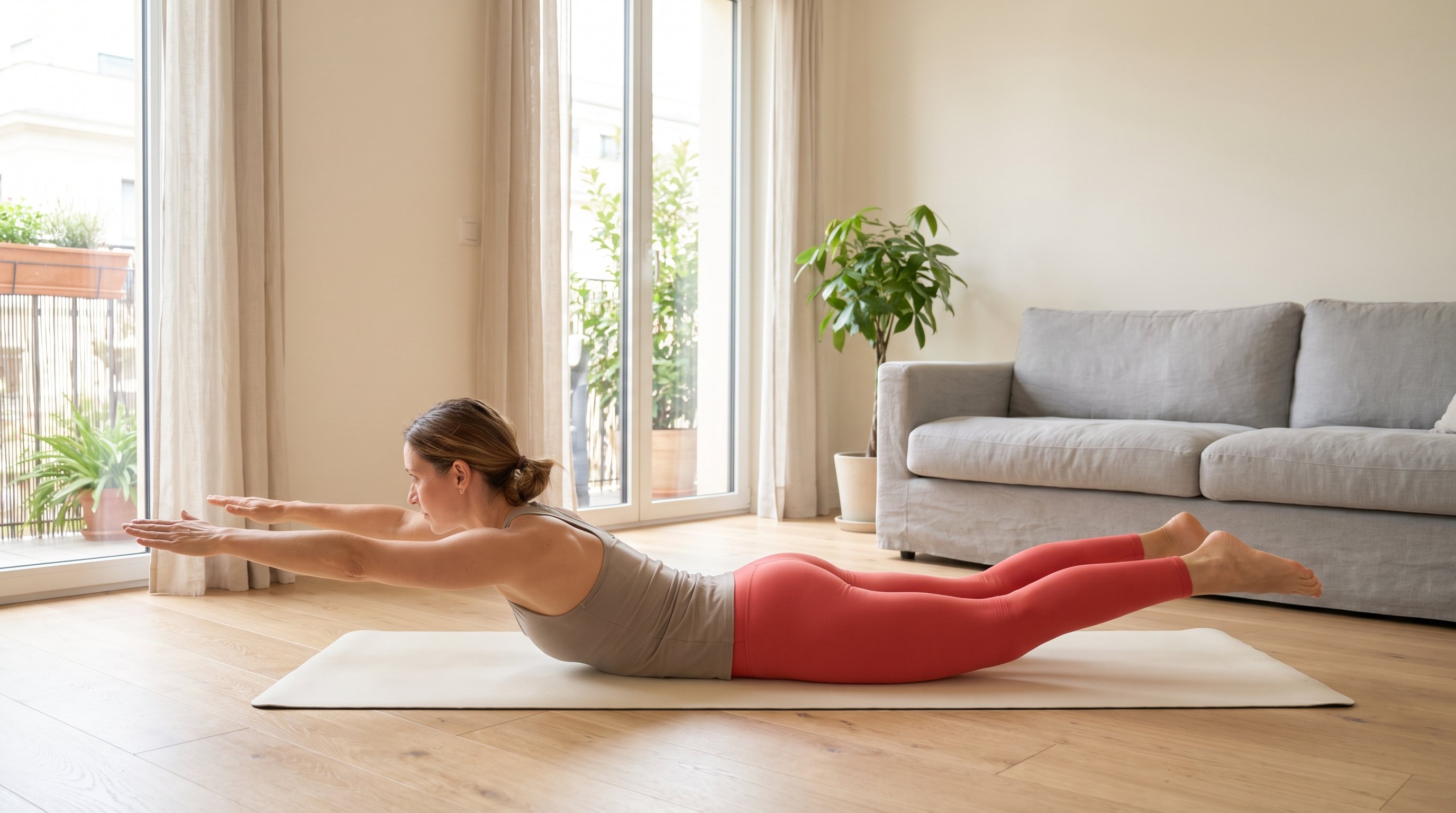
Lying face down and lifting your chest and arms off the floor forces your back muscles to fight gravity directly, which is resistance even though nothing is in your hands.
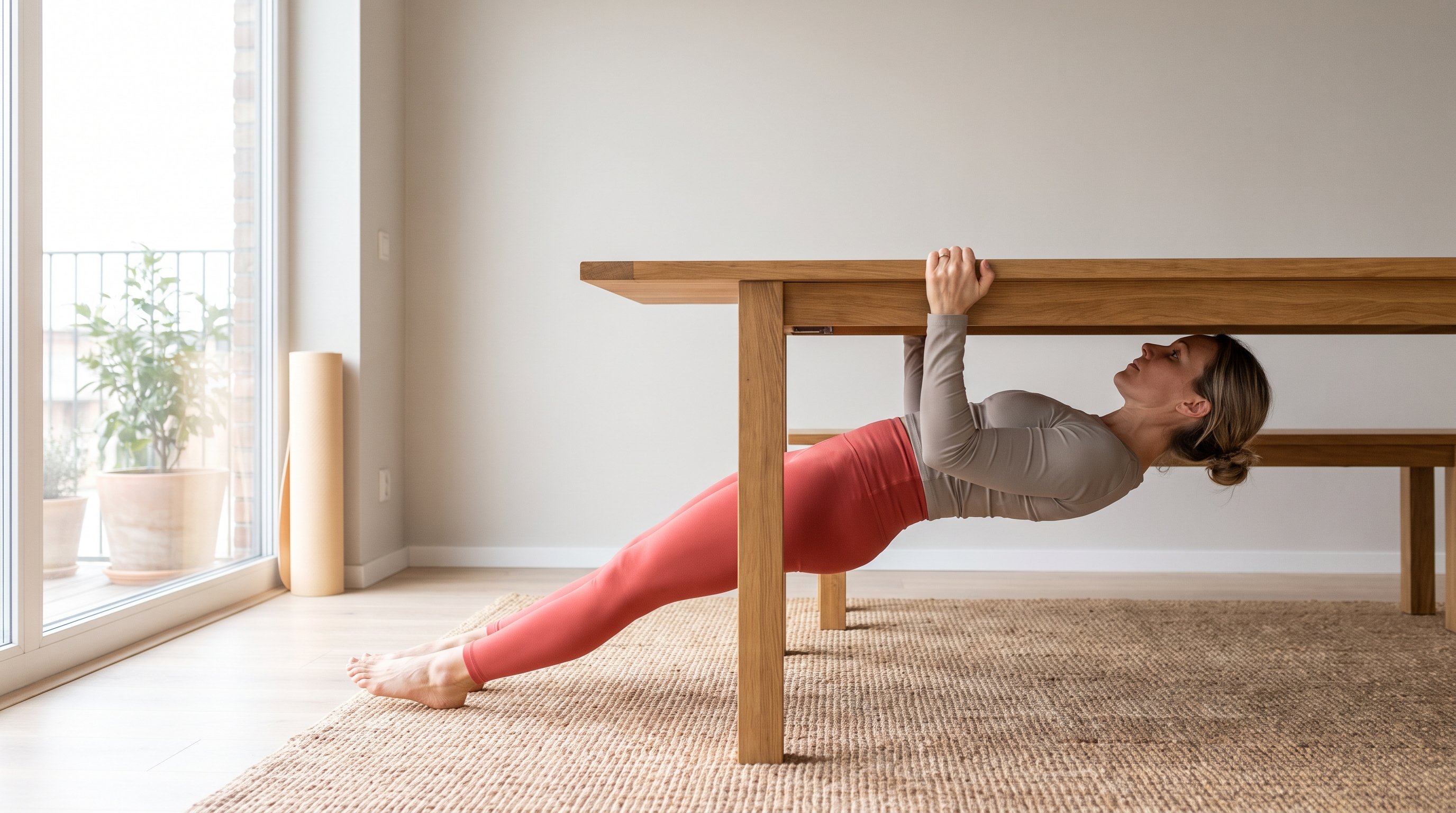
Table or Door Rows
Gripping a sturdy table edge and pulling your chest toward it mimics a row pattern, loading the same muscles a cable machine would target.
Both patterns rely on controlled, slower reps rather than speed, because slower movement keeps the muscle under tension longer.
What Changes Your Back Workout Results at Home
Not every variable matters equally. Three things decide whether a home back routine actually moves the needle.
The Three Levers That Matter Most
- How often you train - a back hit twice a week has more chances to adapt than one trained once every ten days.
- How slow you move - a controlled three-second lift and lower builds more tension than a fast, loose rep.
- Whether you finish each set close to fatigue - stopping well short of effort every time gives the muscle little reason to change.
A Sample No-Equipment Back Routine You Can Repeat
Here is a simple weekly structure built around movements that need nothing but floor space.
| Day | Focus |
|---|---|
| Monday | Superman holds, table rows |
| Tuesday | Rest or light walking |
| Wednesday | Reverse snow angels, prone pulls |
| Thursday | Rest or mobility work |
| Friday | Superman holds, table rows |
| Weekend | Rest or optional light session |
Two focused sessions a week, done with control, beats five rushed ones that fizzle out by week two.
Making Back Training Work Around a Busy Week
A back routine does not need a dedicated hour. Ten focused minutes before the day starts, or right after a shower, is enough to get through the sets above.
What actually matters is showing up for the session more often than you skip it, which is the whole idea behind adherence over intensity.
This is where a tool like Nordletics can help, since it keeps your workout plan, your progress tracker, and your schedule in one place instead of scattered across notes and memory.
When a Home Back Routine Starts to Feel Normal
The first couple of weeks usually feel awkward, since movements like table rows and superman holds are not ones most people have practised before.
Around the point where the exercises stop needing a mental checklist, the routine tends to get easier to stick with, not because the work is lighter but because it feels familiar.
Avoid chasing a number or a date for this. Focus on finishing sessions, and the routine tends to settle in on its own schedule.
Mistakes That Undo a No-Equipment Back Routine
Rushing Through Every Rep
Fast, bouncy reps rely on momentum instead of muscle, which means the back does far less work than it looks like. Slow the lift and the lower down and feel the muscle doing the job.
Skipping Rest Days Entirely
Training the back daily without rest does not speed anything up, since the muscle needs recovery time to adapt between sessions. Two or three sessions a week with rest between them is plenty.
Only Doing One Movement Pattern
Relying on just supermans or just rows misses other angles the back needs to work from. Mixing a pulling pattern with an extension pattern covers more of the muscle.
Ignoring Posture Outside the Workout
Ten good minutes of training cannot undo hours of slouched sitting the rest of the day. Standing and sitting a little taller between sessions supports the work you are putting in.
Building a Nordletics Back Workout You Can Keep
A back routine is only useful if it survives contact with a real week, and that is the exact problem Nordletics is built to solve.
Nordletics lays out beginner-friendly home workouts so you are not guessing which movement to do next, pairs that with a meal plan built around food you already like, and keeps steps, water and weight in one place so progress is visible instead of assumed.

Get Your Workout Plan
Train Smarter Today
Starting Your No-Equipment Back Routine Today
You do not need a gym membership or a bar bolted to a doorframe to give your back real work. A table edge and ten minutes of floor space get the job done.
Pick two days this week, run through the superman and row pattern above, and treat finishing the session as the whole win. If you want the plan built out further, Nordletics can take that off your plate.
FAQ
Yes, movements like table rows, superman holds and reverse snow angels load the back muscles using gravity and your own bodyweight as resistance. Progress comes from consistency and slow, controlled reps rather than from any specific tool.
It only feels easy if the reps are rushed or the range of motion is shallow. Slowing each rep down and pausing at the top of the movement makes these exercises far more demanding than they look.
A low sofa edge, a solid countertop, or even a towel looped around a secure door handle can work the same pulling pattern. The goal is just something fixed enough to pull your chest toward.
Nothing is lost permanently, the back does not detrain that quickly from a short gap. Picking the next scheduled session back up, which is easier to do with a plan laid out in something like Nordletics, is all that is needed to keep moving forward.
Share this post