At Home Core Workout: The Guide That Actually Fits Your Week
By:Author:Nordletics Editorial
Updated on:October 28, 2026
- Setting Up Your First at Home Core Workout
- How Often a Home Core Routine Actually Needs You
- Making Core Training Work Around a Busy Week
- A Four-Week Starting Plan for Your Core
- When Core Progress Starts to Feel Slow
- Where Home Core Routines Commonly Break Down
- Building a Nordletics Core Routine You Can Repeat
- Starting Your at Home Core Workout Today
An at home core workout works when it fits into a few square metres of floor space and ten to twenty minutes you actually have, not the forty-five you wish you had.
The core is a group of muscles - front, sides and back of your midsection - that stabilise your spine and transfer force between your upper and lower body. Train them with bodyweight moves often enough and that stability shows up in everything else, from how steady you feel in a squat to how your posture holds up by the end of a long day.
This guide covers the steps to get started, how often to train, a four-week structure, where people usually quit, and the mistakes worth skipping entirely.
Setting Up Your First at Home Core Workout
You don't need equipment, a gym membership, or a spare room to get started. You need a plan simple enough to repeat on a bad day, because bad days are when consistency is actually built.
Steps to Get Your First Session Done
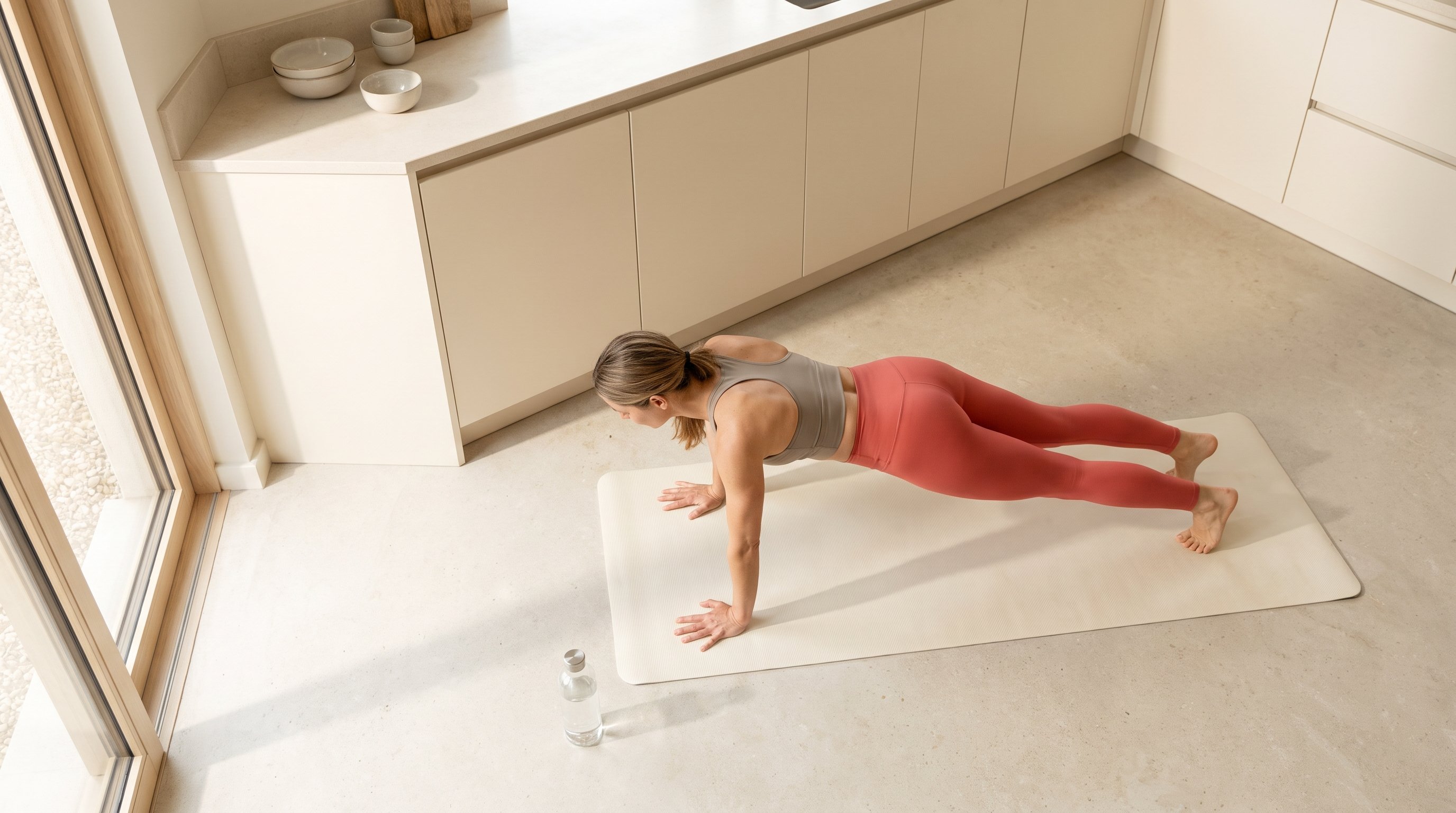
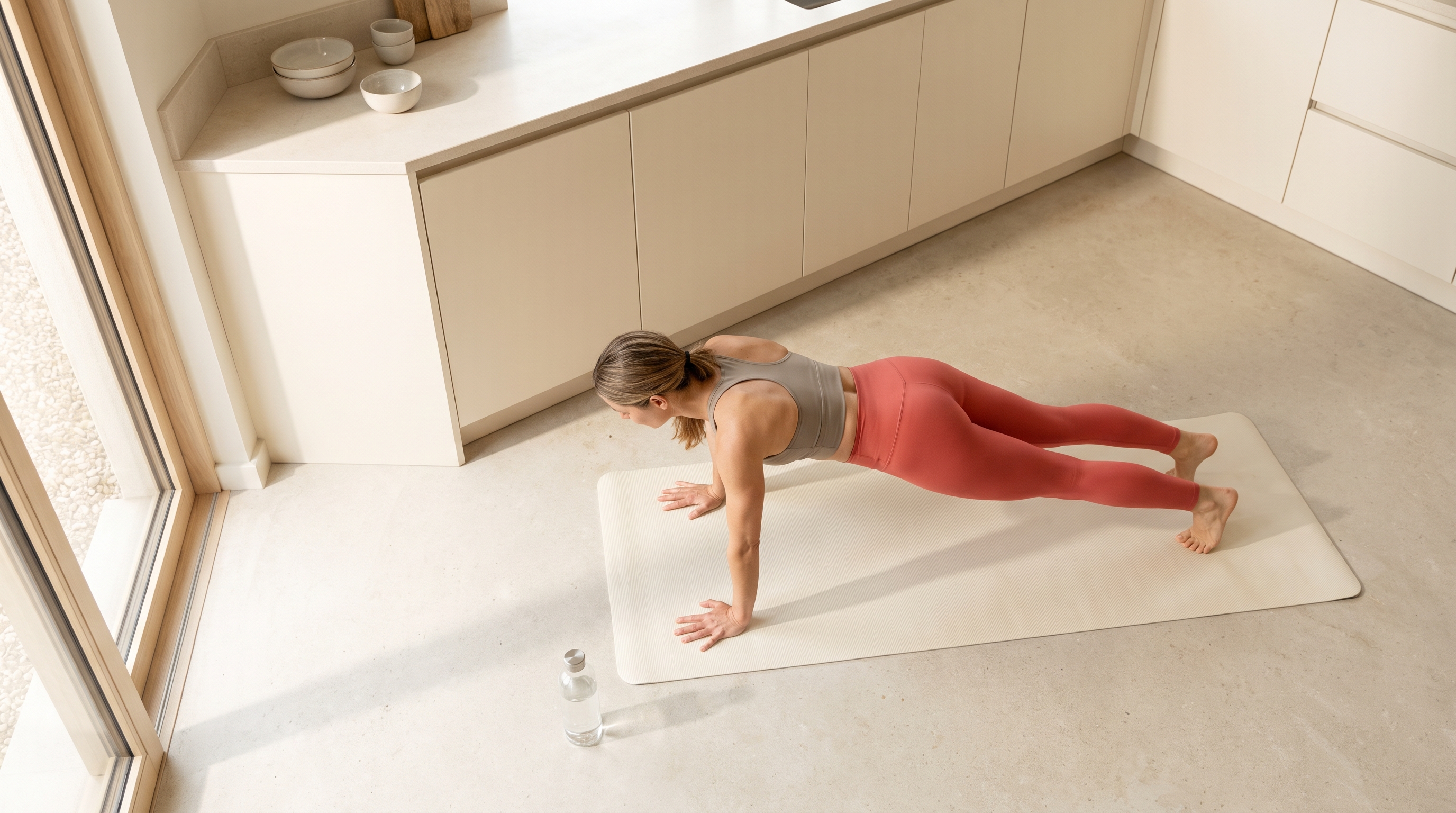
- Clear a small space - a yoga mat's worth of floor is enough for planks, crunches and leg raises.
- Pick three to four moves - a plank, a crunch variation, a rotational move and a leg-raise style exercise covers the main areas.
- Set a low rep or time target - something you can finish even on a tired day, like a 20-second plank or 10 slow crunches.
- Warm up for two minutes - light movement like marching in place gets the midsection ready without adding complexity.
- Move through the circuit once - one full round is a real session when you're starting out.
- Rest between moves, not between thoughts - 30 to 45 seconds is enough to recover without losing momentum.
- Write down what you did - even a one-line note helps you see the circuit again next time without rebuilding it from scratch.
How Often a Home Core Routine Actually Needs You
Core muscles recover faster than larger muscle groups like legs or chest, which is part of why they tolerate more frequent, shorter sessions.
A Realistic Weekly Cadence
Three sessions a week is enough to build a habit and see the stability carry into other movements. Going beyond that adds diminishing returns unless the sessions stay short.
| Frequency | Session Length | Best For |
|---|---|---|
| 2 sessions weekly | 10 to 15 minutes | Very busy weeks |
| 3 sessions weekly | 15 to 20 minutes | Most people starting out |
| 4 sessions weekly | 10 to 15 minutes | Short, frequent sessions |
| 5 sessions weekly | 10 minutes | Building a daily habit |
Making Core Training Work Around a Busy Week
The honest limitation is that core training alone won't change how your midsection looks - the body doesn't let you choose where it holds or releases fat, no matter how targeted the exercise feels.
What core training does reliably give you is strength, stability and better posture, and those benefits show up regardless of anything else happening with your weight.
Fitting it into a real week means attaching it to something you already do - right after brushing your teeth, or during the first ten minutes of a show you watch anyway. Nordletics structures this kind of short home routine into a plan that adjusts around the days you actually have, so you're not reinventing the circuit from memory every time.
A Four-Week Starting Plan for Your Core
The order below matters more than the exact numbers - it moves from learning the positions to holding them longer to adding variety.
| Stage | Focus | Weekly Target |
|---|---|---|
| Week 1 | Learn the four core positions | 2 to 3 short sessions |
| Week 2 | Hold planks a few seconds longer | 3 sessions, same moves |
| Week 3 | Add a rotational move | 3 sessions, slightly longer |
| Week 4 | Repeat the full circuit twice | 3 to 4 sessions |
When Core Progress Starts to Feel Slow
The first couple of weeks usually feel encouraging - new moves, visible effort, a sense of doing something. Somewhere around week three or four, the novelty fades and that's exactly where people tend to quit.
Nothing has gone wrong at that point. The sessions just stop feeling new, and the only thing left is whether you show up anyway.
Be patient with how slowly stability and strength build - there's no fixed point where it suddenly clicks, just gradual sessions that get a little steadier over time.
Where Home Core Routines Commonly Break Down
Rushing Through Reps Without Control
Fast, sloppy crunches do less than slow, controlled ones. Slow the tempo down and feel the muscle working instead of counting reps on autopilot.
Only Training the Front of the Midsection
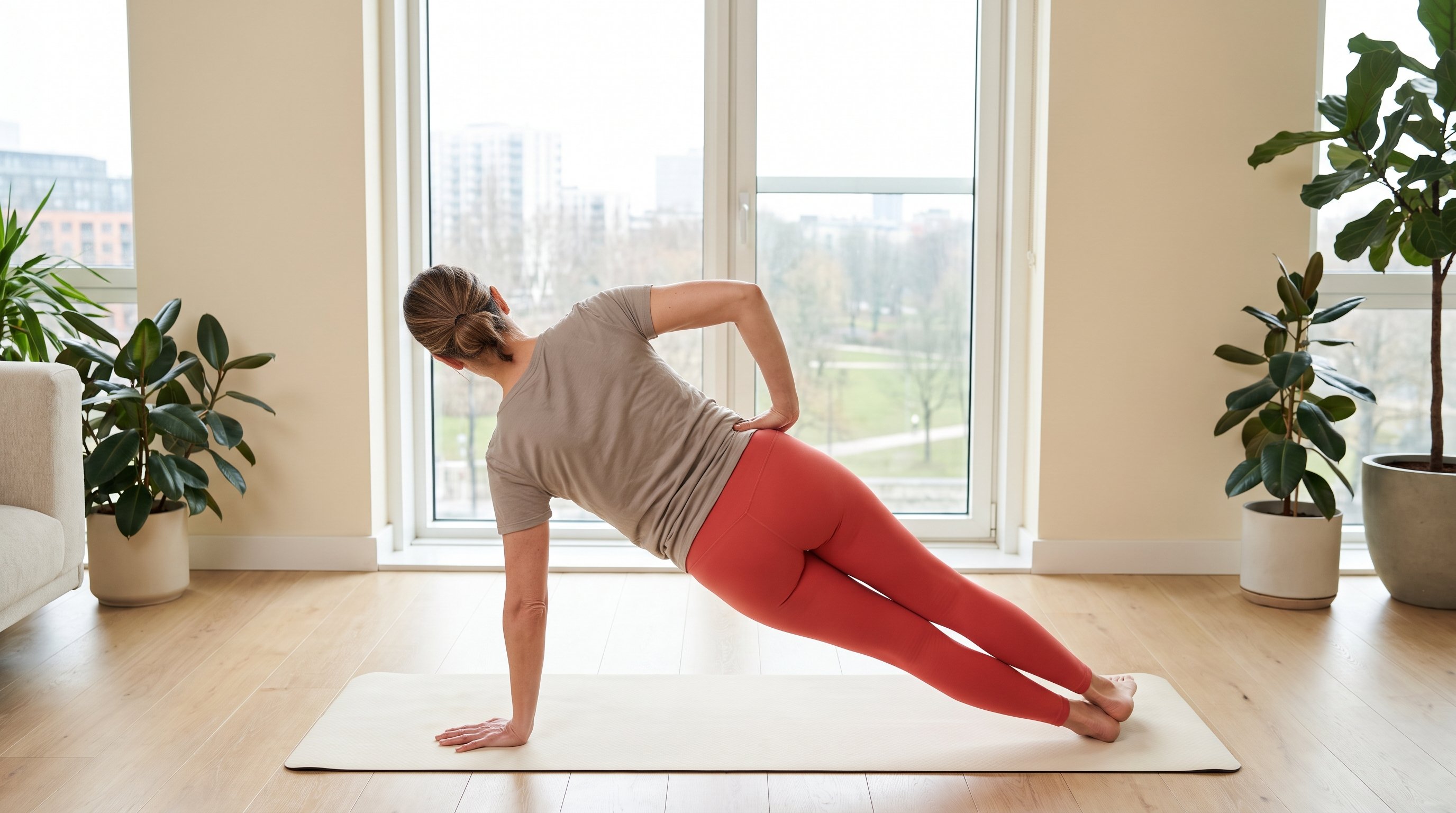
Crunches alone skip the sides and lower back that also make up the core. Rotate in side planks and a lower-back-friendly move like a bird dog to cover more ground.
Expecting Visible Changes From Core Work Alone
The core gets stronger before it looks any different, and how it looks depends on factors core training doesn't touch. Judge progress by what you can hold and for how long, not by appearance.
Skipping Sessions Entirely After Missing One
One missed session turns into a skipped week more often than people expect. Treat a missed day as a single missed day, then get back to the next one on the schedule.

Building a Nordletics Core Routine You Can Repeat
A core routine only pays off if it survives contact with a real week - busy mornings, tired evenings, days where motivation just doesn't show up.
Nordletics lays out short, beginner-friendly home workouts alongside progress trackers so you can see sessions adding up instead of guessing whether you're actually doing enough, plus a meal plan built around food you already like for the days nutrition matters as much as movement.
Get Your Workout Plan
Train Smarter Today
Starting Your at Home Core Workout Today
Pick three moves, clear a small patch of floor, and do one round today - that's the whole starting point, nothing more complicated than that.
Consistency across weeks beats intensity in any single session, and a structured plan like Nordletics makes it easier to keep stacking sessions instead of starting over each time life gets busy.
FAQ
Core exercises strengthen the muscles underneath, but the body doesn't let you choose where it holds or loses fat. Appearance depends on factors beyond any single exercise, so treat core training as a strength goal rather than an appearance shortcut.
Bodyweight moves like planks and leg raises can be made harder by slowing the tempo or extending the hold, so difficulty isn't capped by skipping equipment. The muscle doesn't know whether resistance came from a weight or from your own control.
A core workout needs a space roughly the size of a yoga mat, which fits in most rooms including a corner of a bedroom or living room. Early morning or late evening sessions also sidestep noise or privacy concerns for most households.
The drop-off tends to happen once the novelty wears off and sessions start feeling repetitive rather than new. Having a set plan to follow, like the structured routines inside Nordletics, removes the daily decision of what to do and makes it easier to keep going.
Share this post