Best Abs Workout at Home: How to Stick With Core Training
By:Author:Nordletics Editorial
Updated on:October 28, 2026
- Building a Home Abs Routine Step by Step
- How Often to Train Your Core at Home
- Fitting Abs Training Into a Busy Week
- A Four-Week Starting Plan for Core Training
- When Core Training Starts to Feel Routine
- Where Home Abs Workouts Commonly Break Down
- Making the Best Abs Workout at Home Stick With Nordletics
- Starting Your Home Abs Routine This Week
The best abs workout at home is one you actually repeat - a short set of core moves like planks, bicycle crunches and leg raises, done three to four times a week with no equipment needed.
Your core is a group of muscles, not a single switch you flip. Training it regularly builds strength and stability, but the muscle itself doesn't decide where your body stores fat, so visible definition depends on overall body composition, not how many crunches you do.
This guide covers how to structure a home abs session, how often to train, a four-week starting plan, where people usually quit, and the mistakes that quietly stall progress.
Building a Home Abs Routine Step by Step
A solid core session doesn't need to be complicated. Follow this order to cover the main areas of the core without needing any equipment.
A Simple Core Session Structure
- Warm up for 2-3 minutes - light movement like marching on the spot or arm circles gets the body ready.
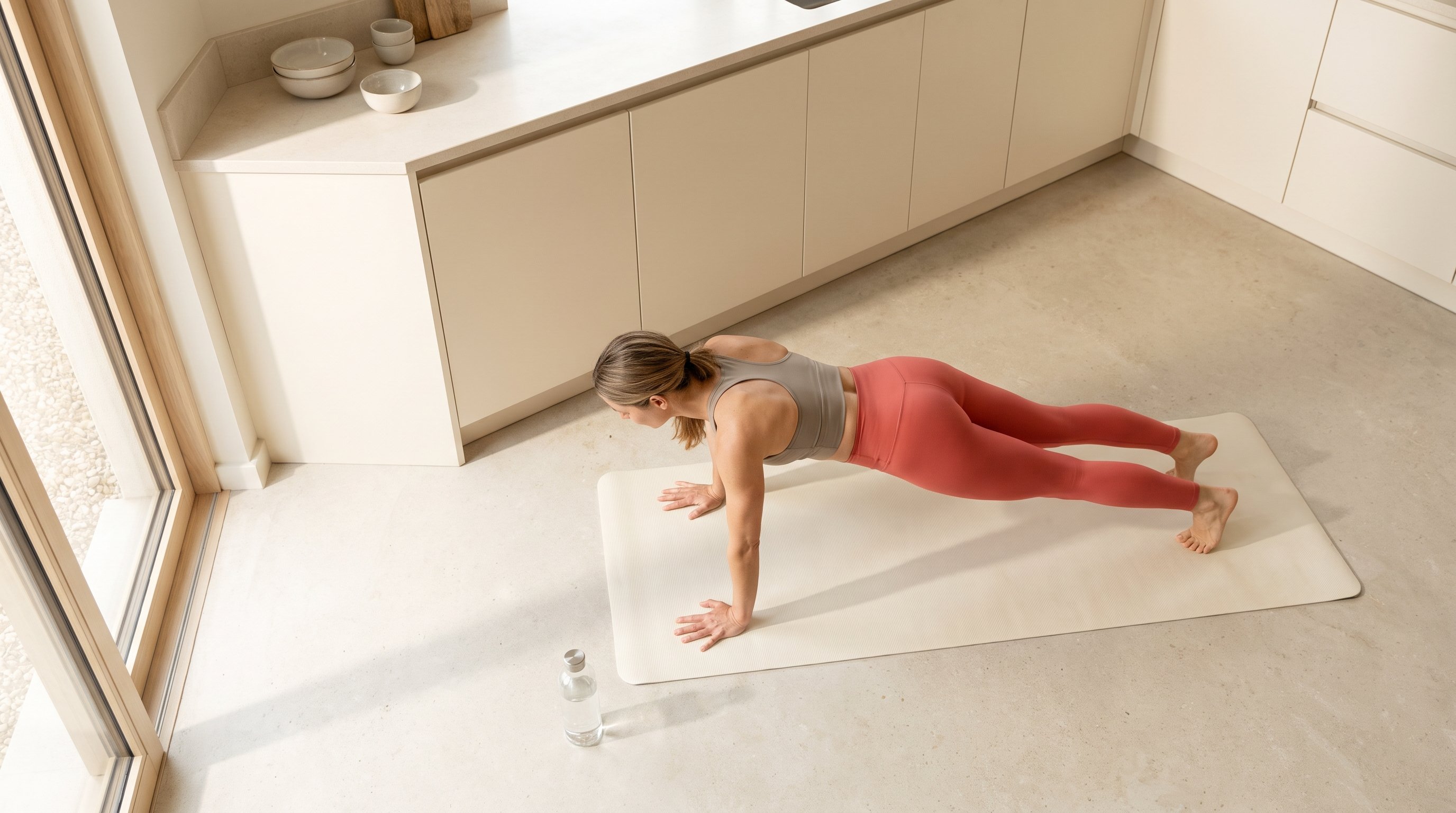
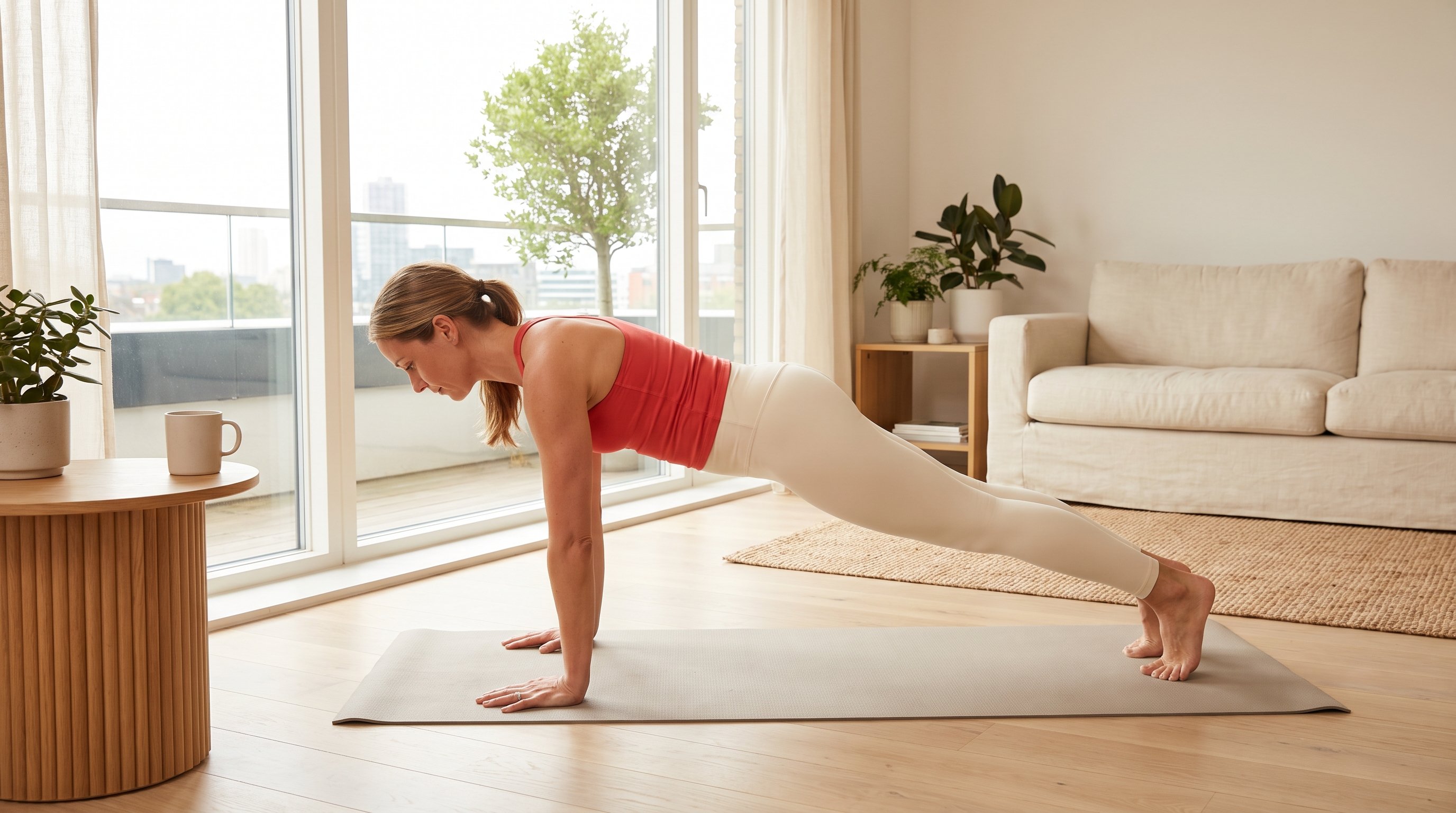
- Start with a plank hold - 20-40 seconds builds baseline core stability before anything dynamic.
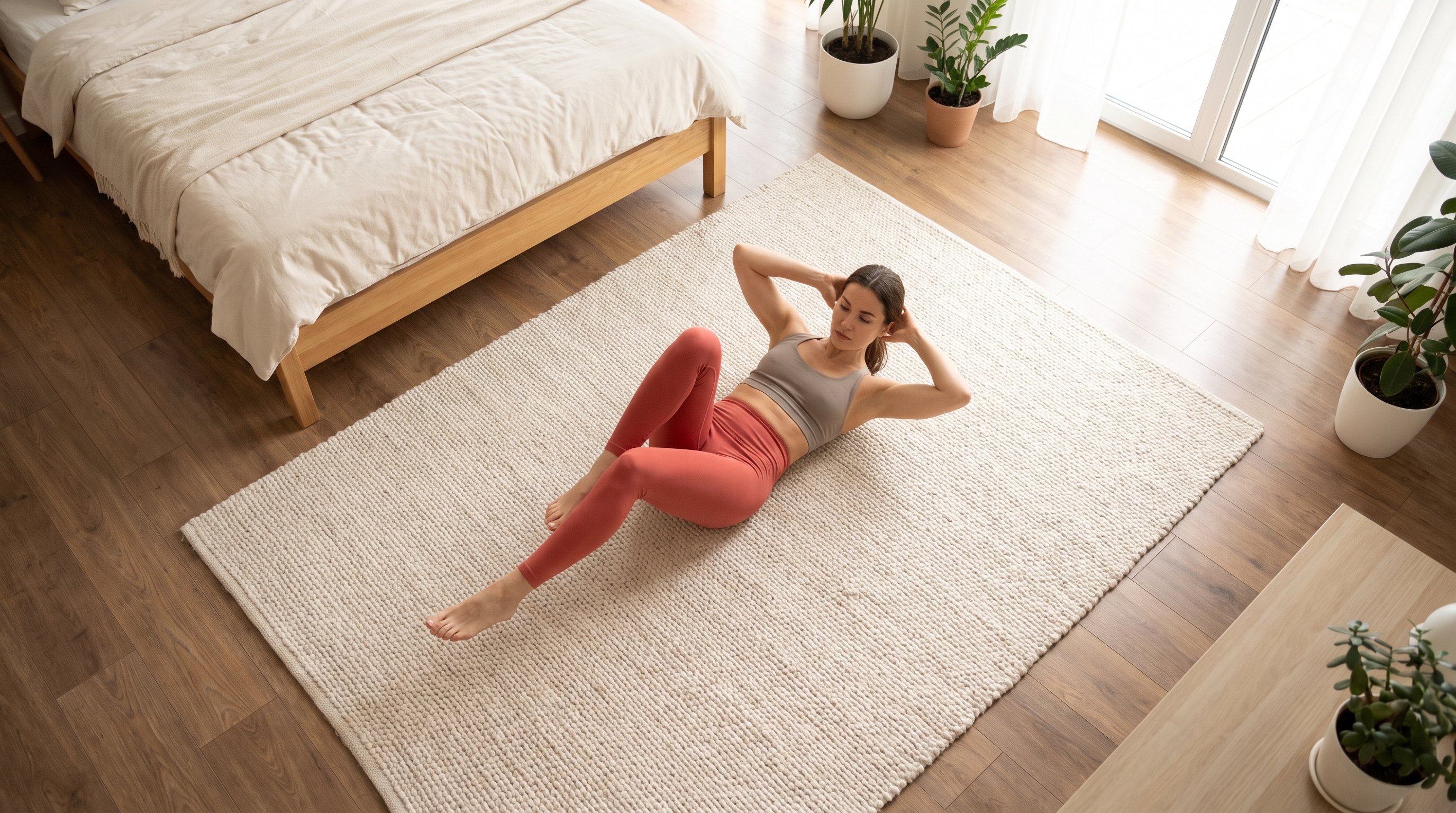
- Add bicycle crunches - 2-3 sets of 15-20 reps per side work the obliques through rotation.
- Move to leg raises - 2-3 sets of 10-15 reps target the lower abdominal area.
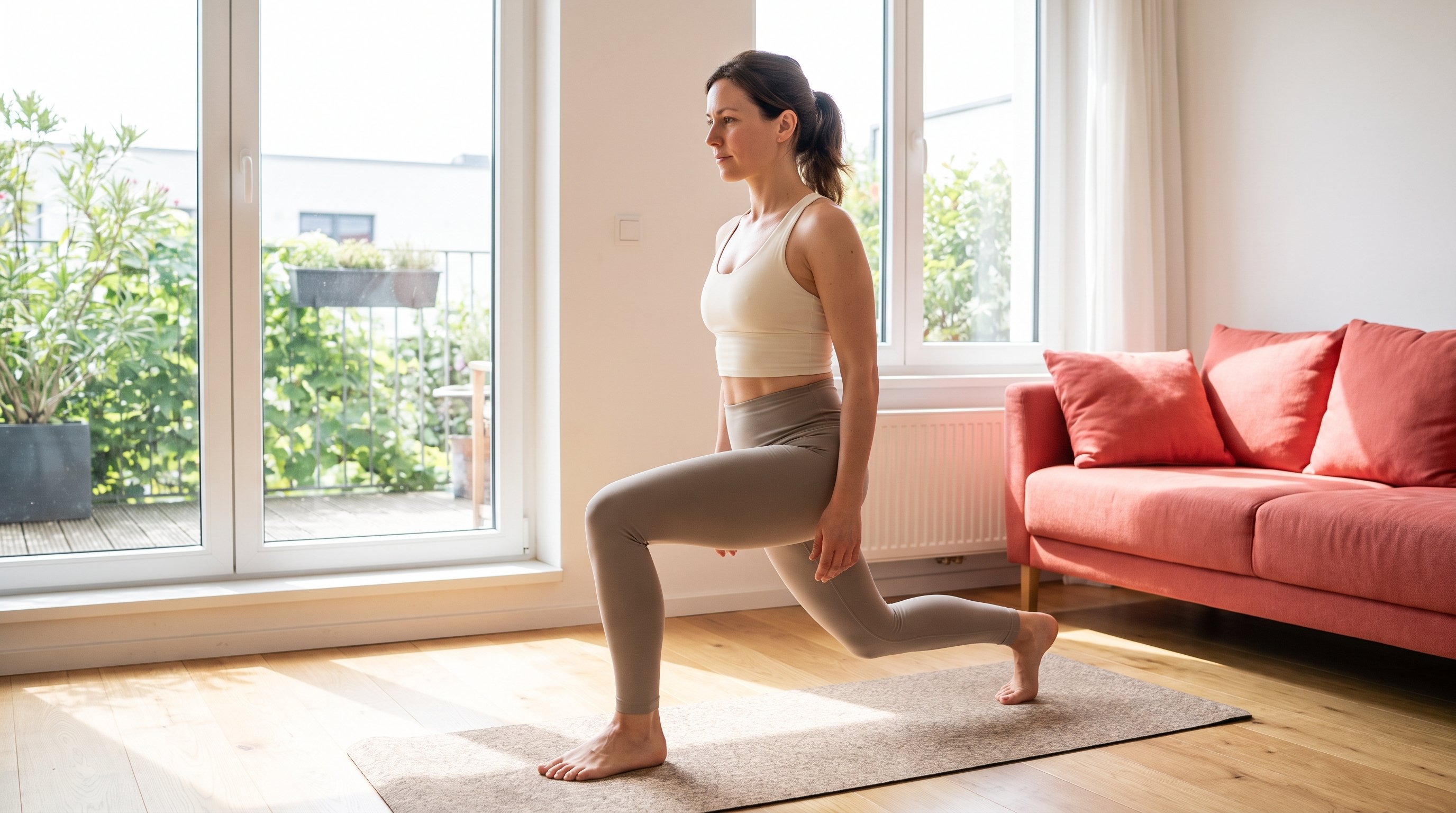
- Finish with a dead bug or bird dog - 2 sets of 10 reps per side reinforce control and posture.
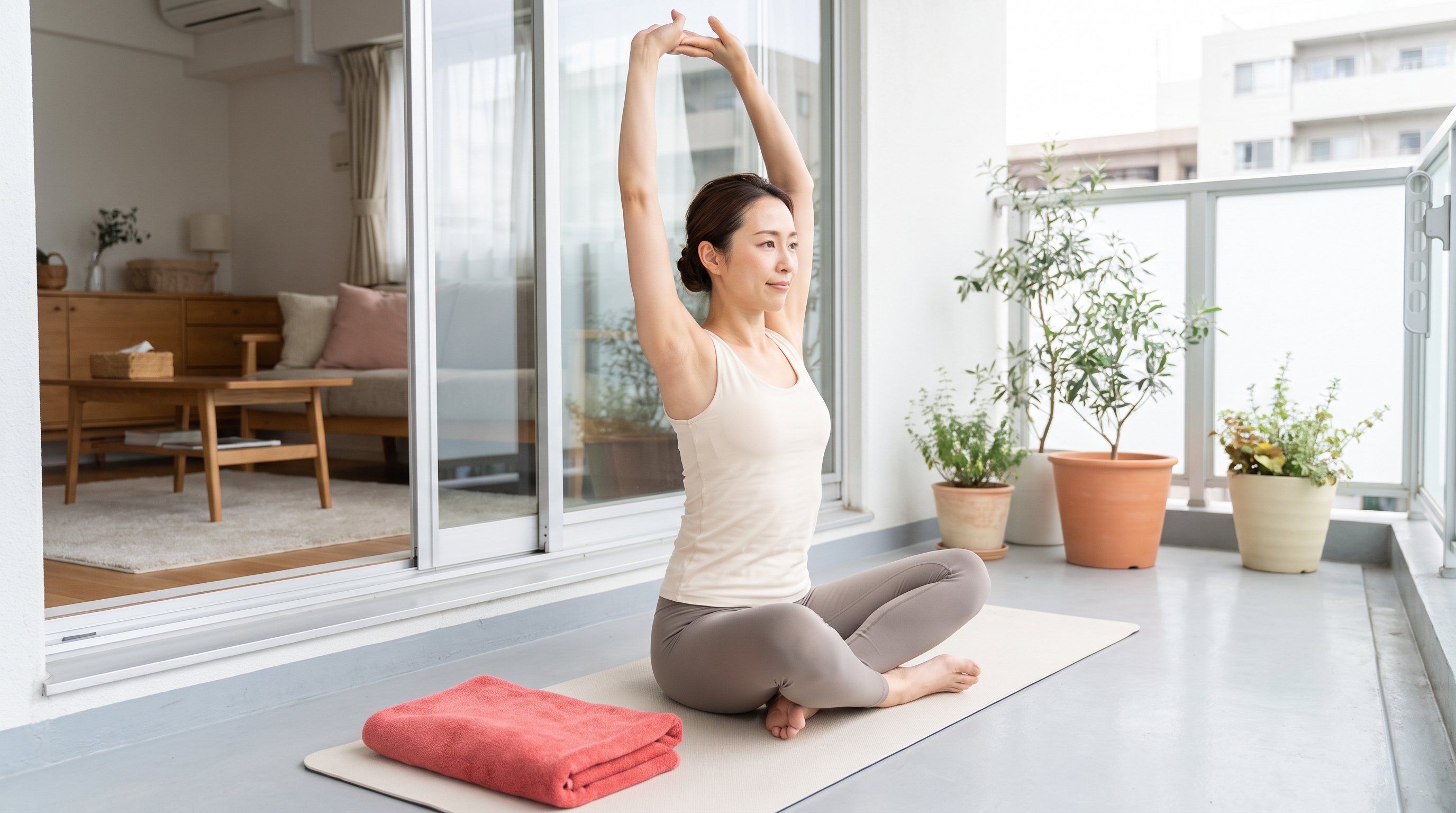
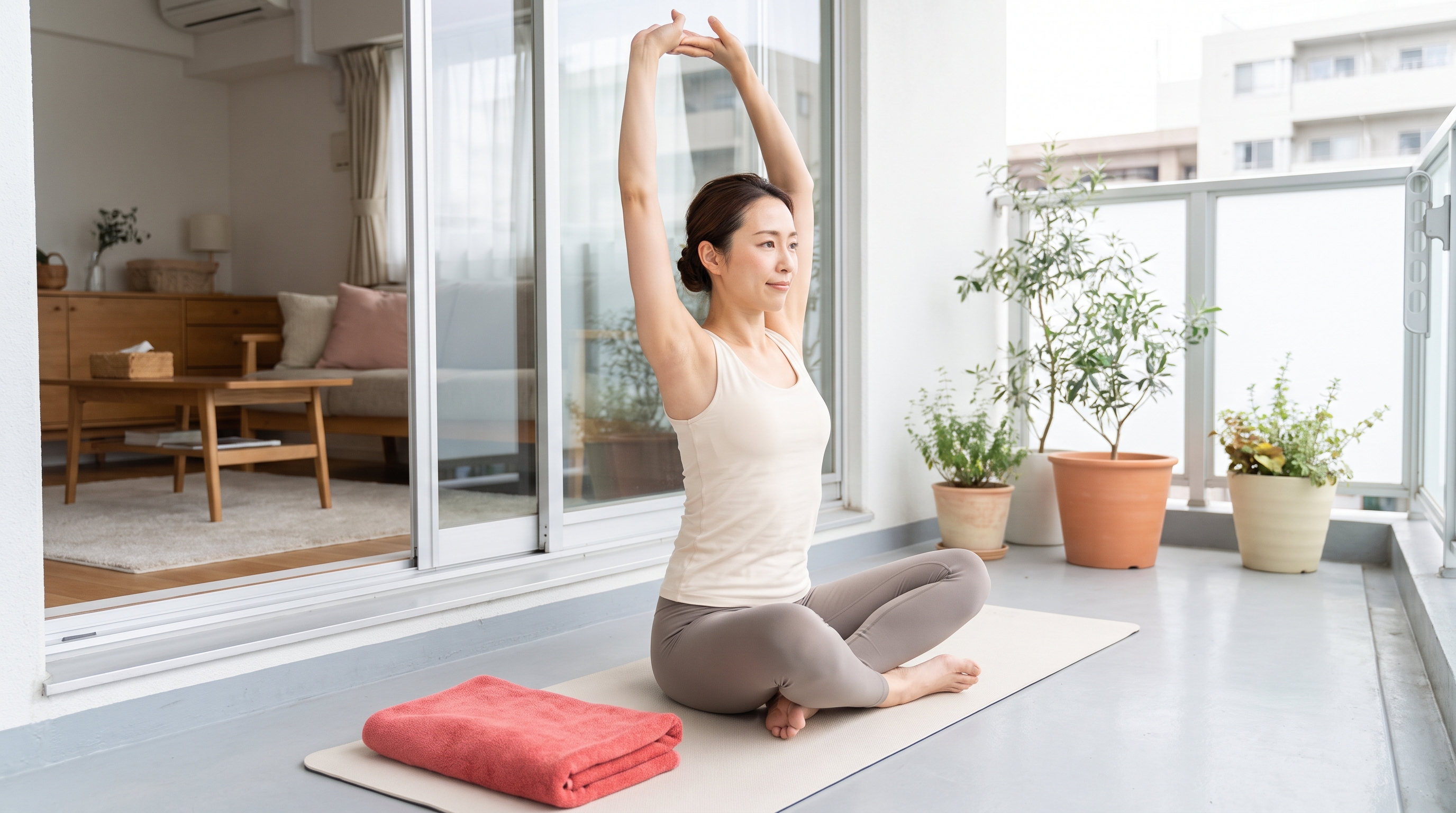
- Cool down with a stretch - a minute or two of gentle stretching helps you finish the session feeling settled, not wrecked.
That full sequence takes roughly 15-20 minutes, which makes it realistic to slot into most days without reshuffling your whole schedule.
How Often to Train Your Core at Home
Core muscles recover faster than larger muscle groups, which is part of why they tolerate more frequent training.
What a Realistic Weekly Dose Looks Like
Three to four sessions a week is enough to build real strength without burning you out on the habit.
| Goal | Frequency | Duration |
|---|---|---|
| Building the habit | 2-3 sessions weekly | 10-15 minutes |
| General core strength | 3-4 sessions weekly | 15-20 minutes |
| Combined with full-body training | 2 sessions weekly | 10 minutes |
| Short daily touch-ins | Daily | 5-8 minutes |
Pick the row that matches where you are right now, not where you'd like to be in a month. You can move down the table as sessions start to feel easier.
Fitting Abs Training Into a Busy Week
The hardest part of core training isn't the exercises, it's remembering to do them on a day packed with everything else.
Attaching your abs session to something you already do - right after brushing your teeth, or during the first ad break of the evening - removes the need to decide all over again each day.
This is where a structured plan actually earns its keep. Nordletics builds short home workout plans you can slot into odd gaps in the day, so a core session doesn't need a free hour to happen, just ten or fifteen quiet minutes.
Pairing that with a simple way to track whether you actually showed up - not just whether you meant to - tends to matter more than the exercises themselves.
A Four-Week Starting Plan for Core Training
The order below matters more than the exact numbers. Build the habit first, then build the intensity.
| Stage | Focus | What Changes |
|---|---|---|
| Week 1 | Learn the moves | 2 sessions, shorter holds |
| Week 2 | Add a third session | Same exercises, steady reps |
| Week 3 | Extend hold times | Plank and dead bug longer |
| Week 4 | Add a fourth session | Full circuit, no shortcuts |
By the end of week four you're not doing anything dramatically harder, just more of it, more often, with better control.
When Core Training Starts to Feel Routine
The first couple of weeks of any abs routine tend to feel underwhelming, because strength gains show up before visible changes do.
This is usually where people quit - not because the plan failed, but because nothing looked different yet in the mirror.
Strength and stability improve well before appearance does, so judge early weeks by how the plank feels, not how your stomach looks.
Once sessions stop needing a mental pep talk and just become part of the day, you've crossed the point where most people give up. Everything past that point tends to feel less like effort and more like maintenance.
Where Home Abs Workouts Commonly Break Down
Chasing Visible Abs Instead of Core Strength
The body doesn't let you choose where it stores or loses fat, so training the core alone won't reveal muscle underneath it. Focus on what core training can actually do - better posture, better stability, fewer aches - and treat appearance as a separate, slower conversation about overall habits.
Doing Too Much, Too Soon
Jumping straight into daily, high-rep sessions often leads to soreness that makes you skip the next few days entirely. Start at two or three sessions a week and let frequency grow once the habit is steady.
Skipping the Warm-Up
Going straight into crunches cold increases how much the lower back compensates for a tired core. A couple of minutes of light movement first keeps the right muscles doing the work.
Only Training the Front of the Core
Endless crunches without any rotation or stabilization work leaves the sides and lower back undertrained. Mixing in bicycle crunches, dead bugs and planks covers the core from more angles.
Ignoring Nutrition Entirely
Movement alone is slow at changing how your body looks, because core training builds muscle but doesn't erase the layer above it. Pairing a consistent routine with a sensible eating pattern is what actually moves the needle over time.
Making the Best Abs Workout at Home Stick With Nordletics
Consistency beats intensity for core training, and consistency is easier when the plan is already laid out for you instead of rebuilt from memory every morning.
Nordletics puts short, beginner-friendly home workouts, a meal plan built around food you already like, and simple progress tracking for steps, water and weight in one place, so core training doesn't live in isolation from everything else that affects how you look and feel. Monthly sessions completed matter more than how hard any single one feels, and having the next workout ready to go removes one more reason to skip it.
Get Your Workout Plan
Train Smarter Today
Starting Your Home Abs Routine This Week
Pick two or three days this week and commit to just the plank-and-crunch sequence above, nothing more elaborate than that.
That single decision, repeated often enough, is what the best abs workout at home actually comes down to - and Nordletics is built to help you keep repeating it without reinventing the plan every week.
FAQ
A simple rotation of planks, bicycle crunches, leg raises and dead bugs covers the core from multiple angles without any equipment. Doing that sequence three to four times a week tends to work better than any single exercise done daily.
Core exercises build strength and muscle underneath, but whether that muscle shows depends on overall body fat, which exercise alone doesn't control. Visible definition is a slower conversation about nutrition and overall activity, not just how many crunches you fit in.
Ten minutes is enough for a shortened version of the routine - a plank hold, one rep-based exercise and a short cooldown. Doing that daily or near-daily still adds up, since consistency matters more than session length.
Most people quit when early weeks don't show visible change, even though strength and stability are already improving by then. Using a structured plan like Nordletics to track sessions completed, rather than how your stomach looks, makes it easier to keep going past that point.
Share this post