Mediterranean Diet for Weight Loss: How to Make It Fit a Real Week
By:Author:Nordletics Editorial
Updated on:October 20, 2026
- Does the Mediterranean Diet Actually Help You Lose Weight
- Mediterranean Diet Versus Low-Carb: Picking Your Approach
- Why the Flexible Plate Beats the Strict Cut
- Adapting the Mediterranean Pattern to Your Situation
- Making the Mediterranean Diet Work on a Busy Weeknight
- The Fast Weight Loss Promise, Answered Honestly
- Pairing Nordletics With Mediterranean-Style Eating
- Starting Your Mediterranean Eating Pattern This Week
The Mediterranean diet supports weight loss mainly by replacing low-fibre, energy-dense convenience food with vegetables, whole grains, fish, legumes and olive oil - foods that tend to fill you up on fewer calories.
It doesn't target weight loss directly. It changes what fills your plate, which changes how much you eat without you having to count every bite.
This article covers whether the approach actually works, how it stacks up against stricter diets, who it suits, and how to keep it going once the novelty wears off.
Does the Mediterranean Diet Actually Help You Lose Weight
Weight loss still comes down to eating fewer calories than you burn over time - no eating pattern changes that arithmetic.
What the Mediterranean diet changes is how easy that deficit is to hold.
The Mechanism Behind It
Vegetables, legumes and whole grains carry a lot of fibre and water for their calorie count, so a plate built around them fills you up on less energy than one built around refined carbs and fried food. Olive oil and fish bring in fat and protein that slow digestion, which can stretch out the feeling of fullness between meals.
The Honest Arithmetic
Say a typical dinner drops from a creamy pasta bake at roughly 900 calories to a bowl of whole-grain pasta with vegetables, chickpeas and olive oil at roughly 600 calories - that's a 300-calorie swing from one meal choice. Repeat a similar swap at lunch and dinner most days and the weekly deficit adds up fast, without any calorie counting involved.
None of this guarantees a number on the scale by a certain date, and it shouldn't - the pace depends on your starting point, your portions and your consistency.
Mediterranean Diet Versus Low-Carb: Picking Your Approach
Most people weighing up weight-loss diets end up choosing between the Mediterranean pattern and a low-carb approach - both can create a deficit, but they do it in different ways.
The table below lays out the practical differences side by side.
| Factor | Mediterranean Diet | Low-Carb Diet |
|---|---|---|
| Food Variety | Wide, includes grains and fruit | Narrower, limits grains and fruit |
| Social Eating | Easy to fit into most meals out | Often needs menu adjustments |
| Meal Prep Effort | Moderate, simple swaps | Higher, needs substitute ingredients |
| Main Fat Source | Olive oil, nuts, fish | Varies, often higher saturated fat |
| Long-Term Fit | Built to be a lasting pattern | Often used as a short phase |
Neither option is wrong - the better one is the one you can actually keep eating in six months, not just six days.
Why the Flexible Plate Beats the Strict Cut
A strict low-carb or very-low-calorie cut can produce a bigger early deficit, but it's also the plan most likely to get abandoned the first time there's a birthday dinner or a hard week at work.
The Mediterranean approach doesn't ban entire food groups, so there's nothing to white-knuckle through at a dinner out or a family meal.
A deficit you hold for ten weeks beats a stricter one you hold for ten days - the smaller, sustainable gap wins on total calories over time simply because it's still happening next month.
That's the whole case for picking the easier route: adherence, not intensity, is what turns a plan into a result.
Adapting the Mediterranean Pattern to Your Situation
If You're Just Starting Out
Start with one meal a day - swap a processed lunch for a salad with chickpeas, olive oil and tinned fish, and leave everything else as it is. Adding the whole pattern at once tends to collapse within a week; one swap at a time tends to stick.
If You're Short on Time
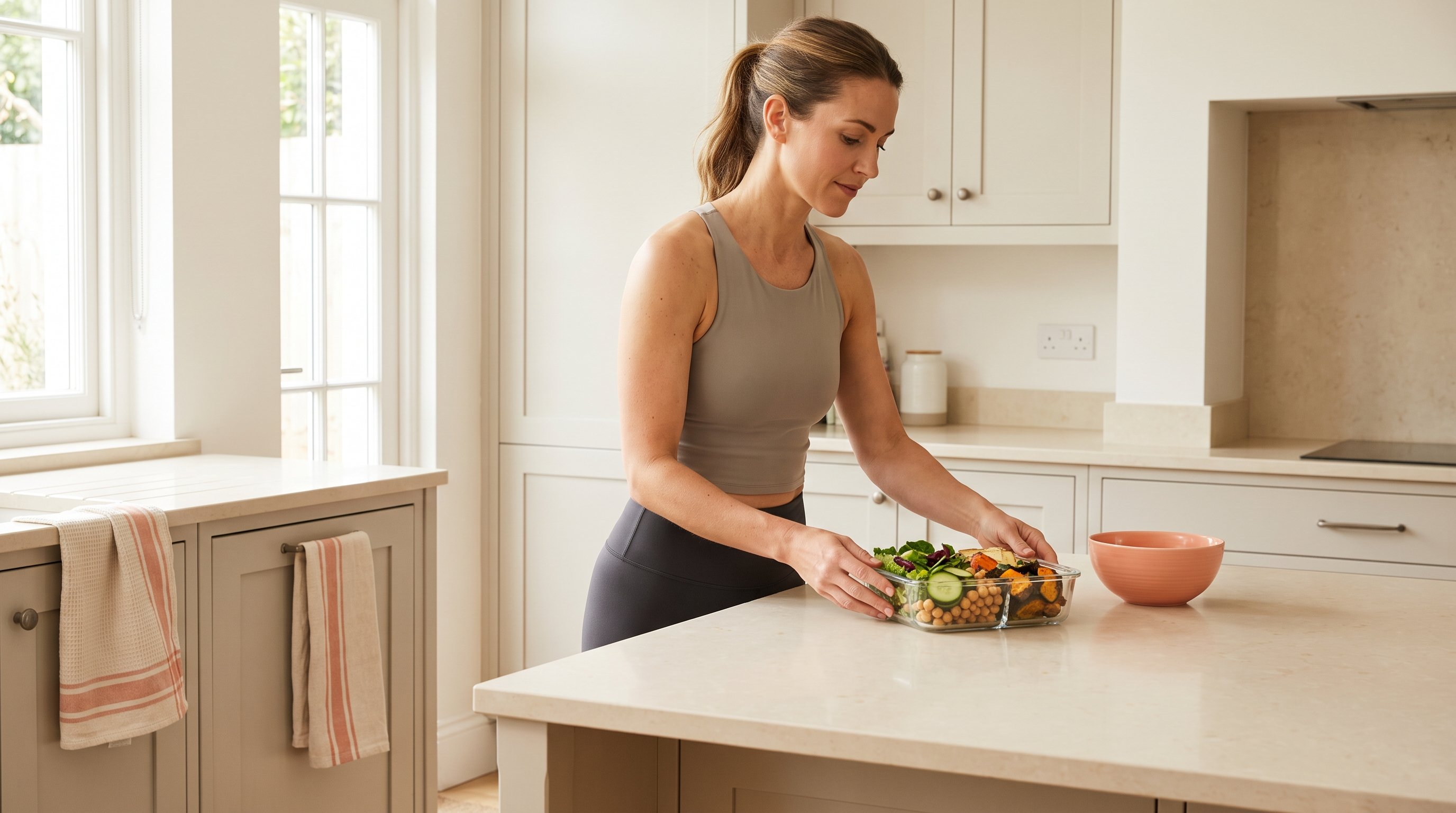
Batch-cook a big pot of lentils or beans on a Sunday and use it across three or four meals - tinned fish, pre-washed greens and frozen vegetables also cut prep time to almost nothing. The Mediterranean pattern doesn't need fresh cooking every single night to work.
If You're Older or Managing Joint Discomfort
The food side of this pattern doesn't ask anything of your joints - it's about what's on the plate, not how you move. Pairing it with gentle, low-impact activity most days is enough to support the deficit without extra strain.
If You're Feeding a Family
Build the base meal - grains, vegetables, legumes, olive oil - the same for everyone, then let anyone who wants extra bread, cheese or meat add it on their own plate. That keeps one dinner working for the whole table instead of cooking two separate meals.
Making the Mediterranean Diet Work on a Busy Weeknight
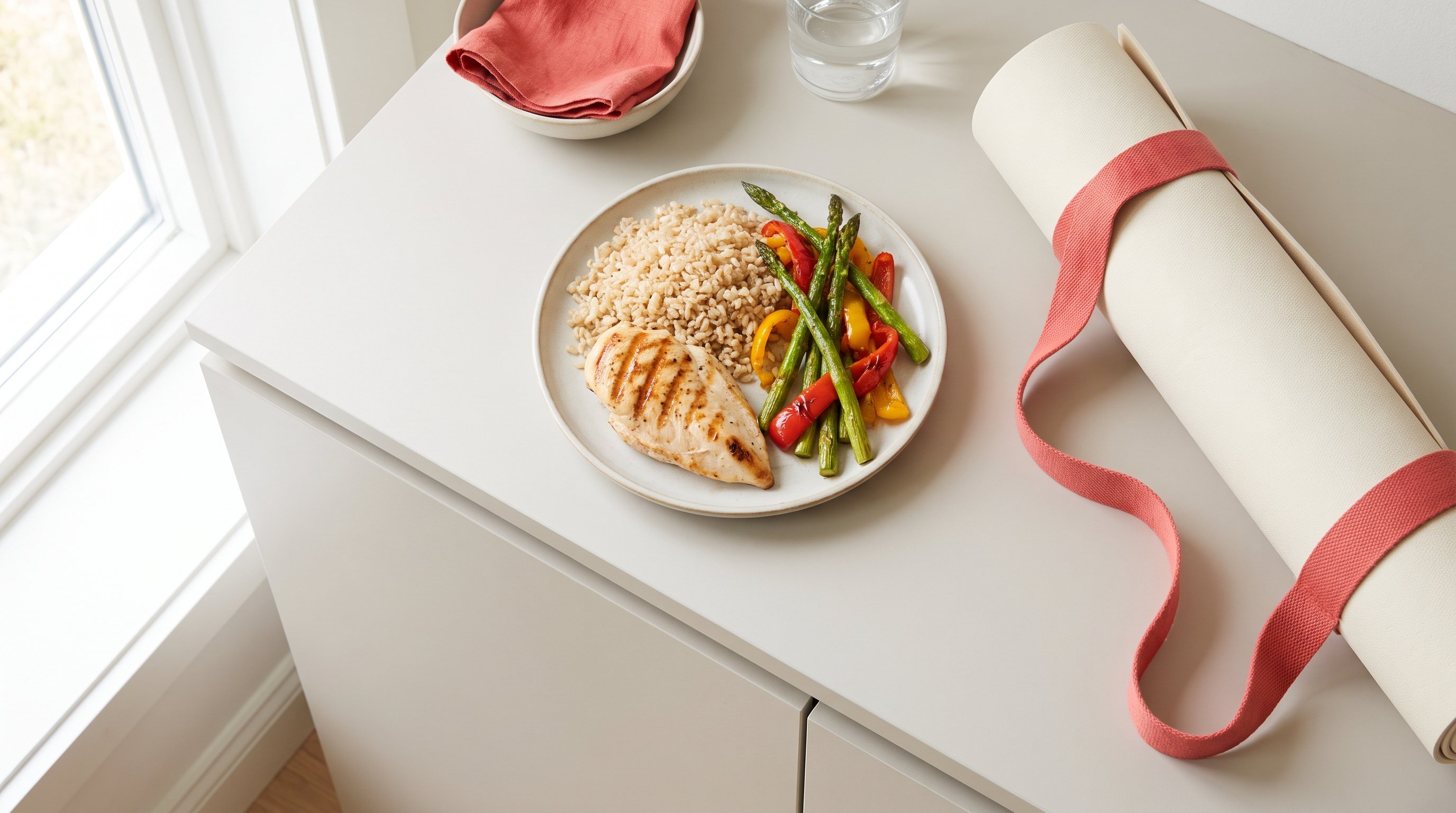
The theory is simple - the hard part is actually getting a plate like this on the table after a long day.
This is where having a plan already written out matters more than knowing the theory.

Nordletics builds a meal plan around food you already like, so Mediterranean-style swaps show up as a normal part of the week instead of a separate project you have to research yourself.
Keeping weight, water and steps logged in one place also makes it easier to notice whether the food changes are actually moving the needle, instead of guessing.
The Fast Weight Loss Promise, Answered Honestly
No eating pattern, Mediterranean or otherwise, produces fast or dramatic weight loss - and nothing lets you choose where on your body that weight comes from either.
The body decides where it draws energy from, and that's not something any meal plan or exercise can direct.
What the Mediterranean diet actually offers is a way to run a calorie deficit without feeling like you're constantly restricting - a pattern that's realistic to repeat for months, which is what the arithmetic of weight loss actually needs.
Pairing Nordletics With Mediterranean-Style Eating
Food changes do most of the work in a deficit, but movement still matters for overall health, and pairing the two is where consistency compounds.
Nordletics pairs a meal plan built around food you already like with beginner-friendly home workouts, so the eating side and the movement side support each other instead of competing for your time.
Sessions completed each month matter more than how hard any single one is - a few short, repeatable workouts a week, backed by a plate full of vegetables, olive oil and whole grains, adds up faster than an occasional intense one ever could.
Get Your Workout Plan
Train Smarter Today
Starting Your Mediterranean Eating Pattern This Week
Pick one meal this week and swap it for a Mediterranean version - vegetables, a whole grain, a source of protein like fish or legumes, and a drizzle of olive oil instead of a heavier sauce.
Repeat that single swap for a week before adding another one, and the pattern starts to feel ordinary rather than like a diet you're following.
If keeping track of meals and movement at the same time feels easier with some structure, Nordletics keeps the meal plan, the workouts and the progress tracker in one place so you're not managing three separate systems.
FAQ
It helps create a calorie deficit because its core foods are high in fibre and water relative to their calories, which tends to lower how much you eat without any deliberate counting. The weight loss itself still comes from that deficit, not from any single food.
Olive oil and cheese are calorie-dense, but the Mediterranean pattern uses them in moderate amounts alongside large portions of vegetables and legumes, not as the bulk of the plate. Portion size still matters - a drizzle of oil is doing a different job than a cup of it.
Batch-cooked legumes, tinned fish and frozen vegetables all fit the Mediterranean pattern and need almost no daily prep. The pattern is about the ingredients on the plate, not about cooking elaborate meals every single night.
The most common drop-off point is trying to overhaul every meal at once instead of swapping one meal at a time, which makes the whole thing feel like too much too soon. Nordletics breaks the eating side into a plan built around food you already like, which tends to hold up better than an all-at-once overhaul.
Share this post