Best Time to Work Out: Making It Fit Your Daily Routine
By:Author:Nordletics Editorial
Updated on:October 20, 2026

- What a Realistic Training Week Looks Like
- How Often You Actually Need to Train
- Why a Fixed Slot Beats Chasing the Ideal Hour
- Fitting a Workout Slot Around a Full Calendar
- Choosing a Time Slot for Your Situation
- When the Routine Starts to Feel Normal
- Building a Nordletics Schedule Around Your Hours
- Settling on a Time That Actually Sticks
The best time to work out is whichever time you'll actually repeat week after week. There's no hour of the day that burns more energy by itself - the body responds to the session, not the clock.
What changes with timing isn't the workout's effect, it's how likely you are to follow through. Mornings dodge the day's distractions, evenings fit people whose energy builds later, and lunchtime slots work for anyone whose schedule has a natural gap in the middle.
This guide covers what a workable week looks like, how often to train, why the easier schedule beats the ambitious one, and how to adapt a routine to real situations like a packed calendar or a later start in fitness.
What a Realistic Training Week Looks Like
Forget the idea of a single perfect slot. A workable week picks one time window and repeats it, because repetition is what makes the habit stick.
A Sample Weekly Pattern
- Monday, Wednesday, Friday mornings - a short session before the day fills up, done before anything can compete for attention
- Tuesday, Thursday evenings - a slightly longer session after work, used on days with no morning space
- Saturday - a flexible slot, moved to whatever hour suits the weekend
- Sunday - a rest day, kept free on purpose so the week has a natural reset point
Notice the pattern doesn't chase an ideal hour - it anchors around the hours that already exist in a normal week.
How Often You Actually Need to Train
Frequency Matters More Than the Clock
The honest answer is that consistency across the week counts for more than which hour you choose. A session completed at a mediocre time beats a session skipped because the ideal time didn't show up.
| Goal | Sessions per Week | Timing Note |
|---|---|---|
| Building a habit | 3 sessions weekly | Same time each day works best |
| General fitness | 3 to 4 sessions weekly | Mix morning and evening freely |
| Busy weeks | 2 sessions weekly | Shortest reliable slot you have |
| Returning after a break | 2 to 3 sessions weekly | Pick one fixed time to rebuild routine |
None of these numbers depend on training before noon or after dinner - they depend on whether the slot survives contact with a normal Tuesday.
Why a Fixed Slot Beats Chasing the Ideal Hour
Picture two approaches: one person waits for the day they feel most energised before training, the other trains at the same hour regardless of mood.
The second approach wins almost every time, because sessions completed per month is what actually drives any change, not how intense or perfectly timed each one was.
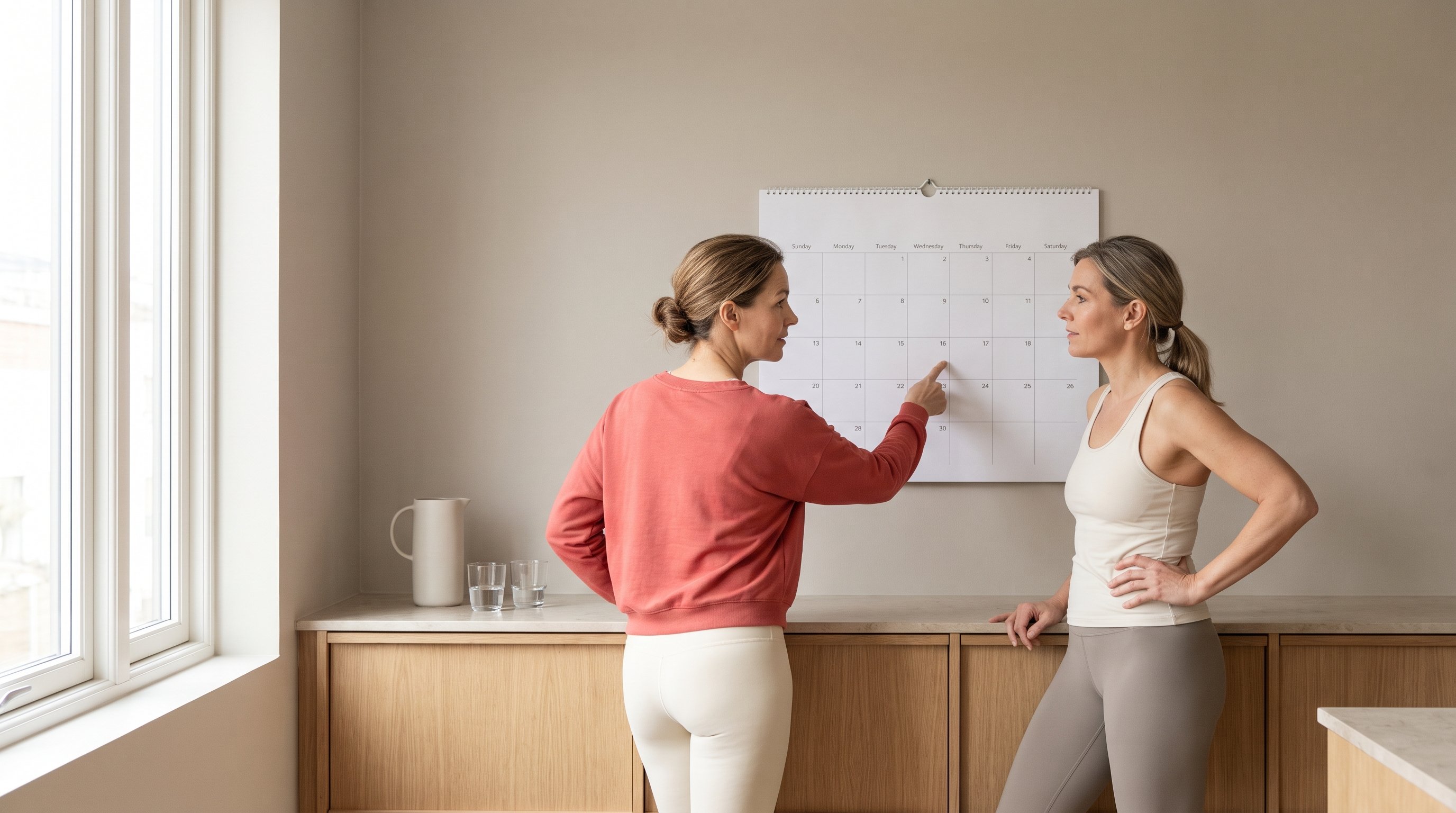
Waiting for peak energy means some weeks get zero sessions, while a fixed slot - even an average one - produces a session almost every time it comes around.
Movement alone also moves slowly without attention to food, so the time slot matters less than whether the week around it includes a plan for both.
Fitting a Workout Slot Around a Full Calendar
Most weeks aren't blank - they're already full of work, family, commuting and everything else that competes for the same hours.
The practical move is to find the smallest gap that already exists, rather than inventing a new one, and build the routine around that gap specifically.
This is where a structured plan helps: Nordletics lays out short home workouts that fit into a gap as small as a lunch break or the twenty minutes before the household wakes up, so the slot you already have becomes enough.
No equipment, no commute to a gym - just a plan that matches the time you actually have free.
Choosing a Time Slot for Your Situation
Just Starting Out
Pick the time of day with the fewest competing demands, even if it isn't the time friends recommend. Early consistency matters more than finding the theoretically optimal hour.
Running a Busy Week
Short sessions squeezed into existing gaps beat long sessions that need a free hour that never arrives. A fifteen-minute slot used every time beats a sixty-minute slot used once a month.
Training Later in Life
A consistent time of day that fits around other commitments - childcare, work, rest - matters more than chasing a specific hour associated with athletes or gym culture. Steady repetition at a comfortable time builds the habit without needing to match anyone else's schedule.
Restarting After a Gap
Choose one fixed slot and protect it for a few weeks before adding variety. A single reliable time rebuilds the habit faster than juggling several different slots at once.
When the Routine Starts to Feel Normal
The first couple of weeks are where most people quit, usually because the chosen slot gets tested by something unplanned - a late meeting, a bad night's sleep, a change in schedule.
That's normal, and it doesn't mean the slot was wrong - it means the slot needs a backup option for the weeks that don't cooperate.
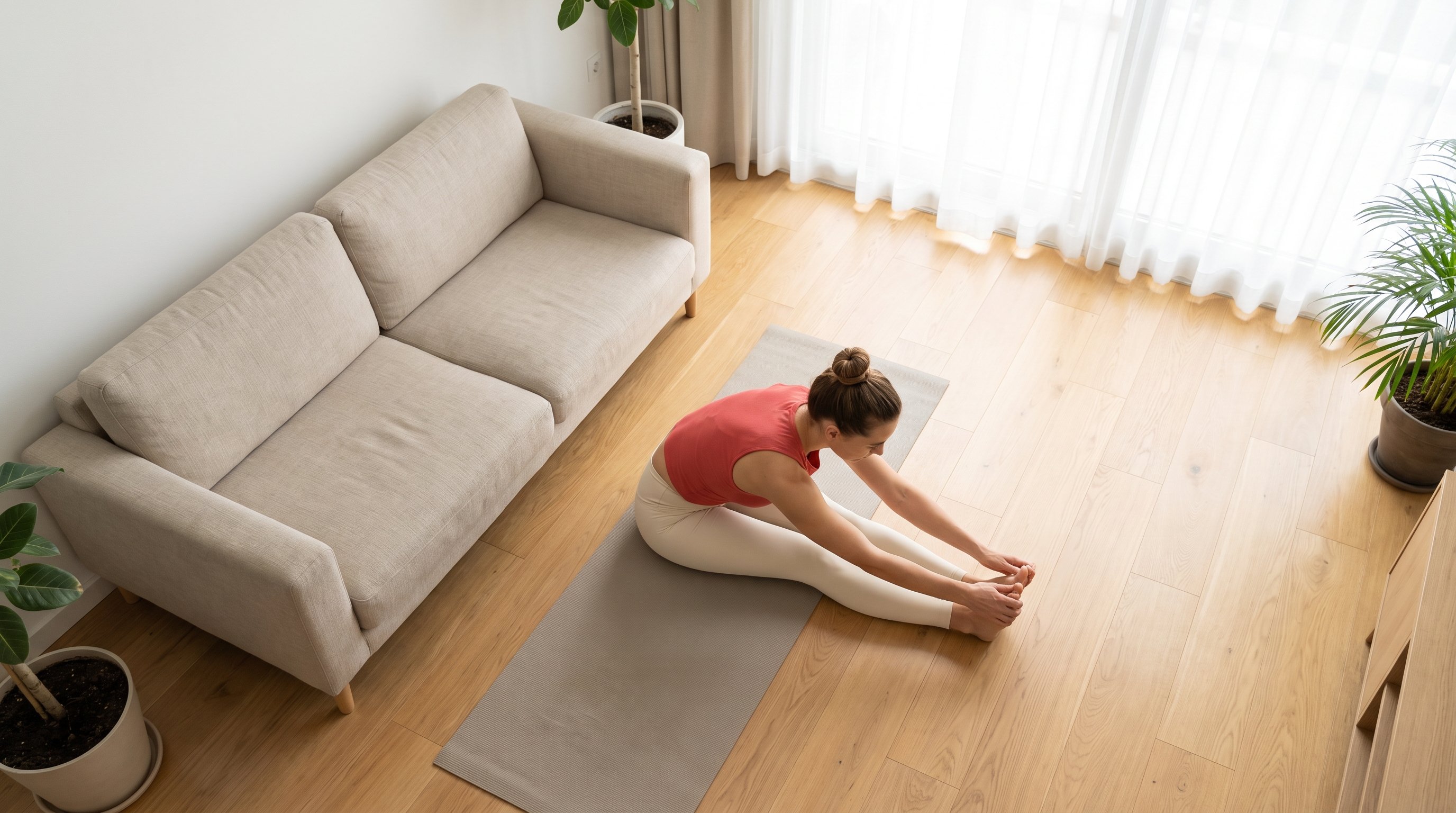
Expect the chosen time to feel effortful at first and more automatic later, without putting a number of weeks on it - everyone's week looks different, so the timeline will too.
Building a Nordletics Schedule Around Your Hours
Once a time slot is chosen, the next question is what to actually do with it - and that's where a lot of routines stall out.
Nordletics gives you a home workout plan built for the time you actually have, paired with a meal plan built around food you already like, so the nutrition side isn't left to guesswork.
Progress tracking keeps steps, water and weight in one place, so the chosen time slot has something to show for it beyond just a tick on a calendar.

Get Your Workout Plan
Train Smarter Today
Settling on a Time That Actually Sticks
There's no secret hour that makes a workout more effective - there's only the hour you'll actually use, week after week, without renegotiating it every morning.
Pick one slot this week, protect it for a few sessions, and let Nordletics handle the structure so the only decision left is showing up.
FAQ
Neither has an advantage by itself - the body doesn't track the clock, it tracks the sessions completed and the food eaten. Pick whichever slot you're more likely to repeat, since that consistency is what actually drives any change over time.
That's common, and it usually means the slot needs a backup rather than needing to be abandoned entirely. Keep a second, shorter option ready for the days the main slot falls through, so the week still gets a session.
A free hour isn't the requirement - a repeatable fifteen or twenty minutes is enough to build the habit. Nordletics is built around short home sessions specifically so a small gap in the day is all that's needed to get started.
It usually means the slot is fighting something else in the schedule, like a meeting that regularly runs long or a task that always creeps into that window. Try shifting the slot by an hour or shortening the session rather than dropping it altogether.
Share this post